Last updated: October 17, 2026
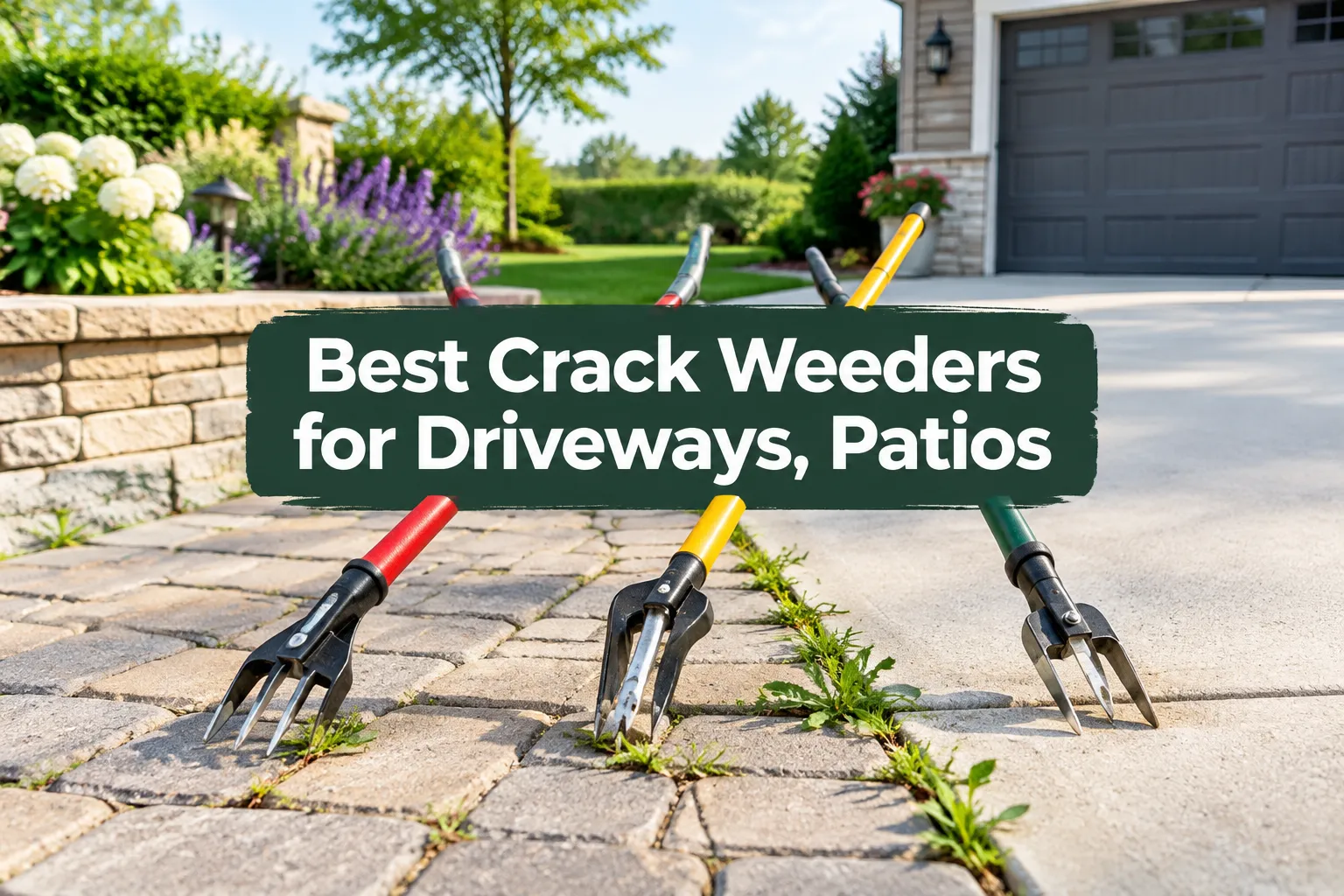
Quick Answer: The best crack weeder tool combines a narrow, hardened steel blade with an ergonomic handle to slice taproots below the soil line in tight crevices without snapping. Top choices for 2026 include the DeWit Patio Knife for precision in 1/8-inch gaps, the Wolf-Garten FK-M for modular stand-up weeding, and the Fiskars Cast-Aluminum weeder for heavy-duty leverage against concrete edges. Choose an L-shaped or 90-degree hook design to effectively drag through expansion joints and sever weed crowns permanently.
Key Takeaways
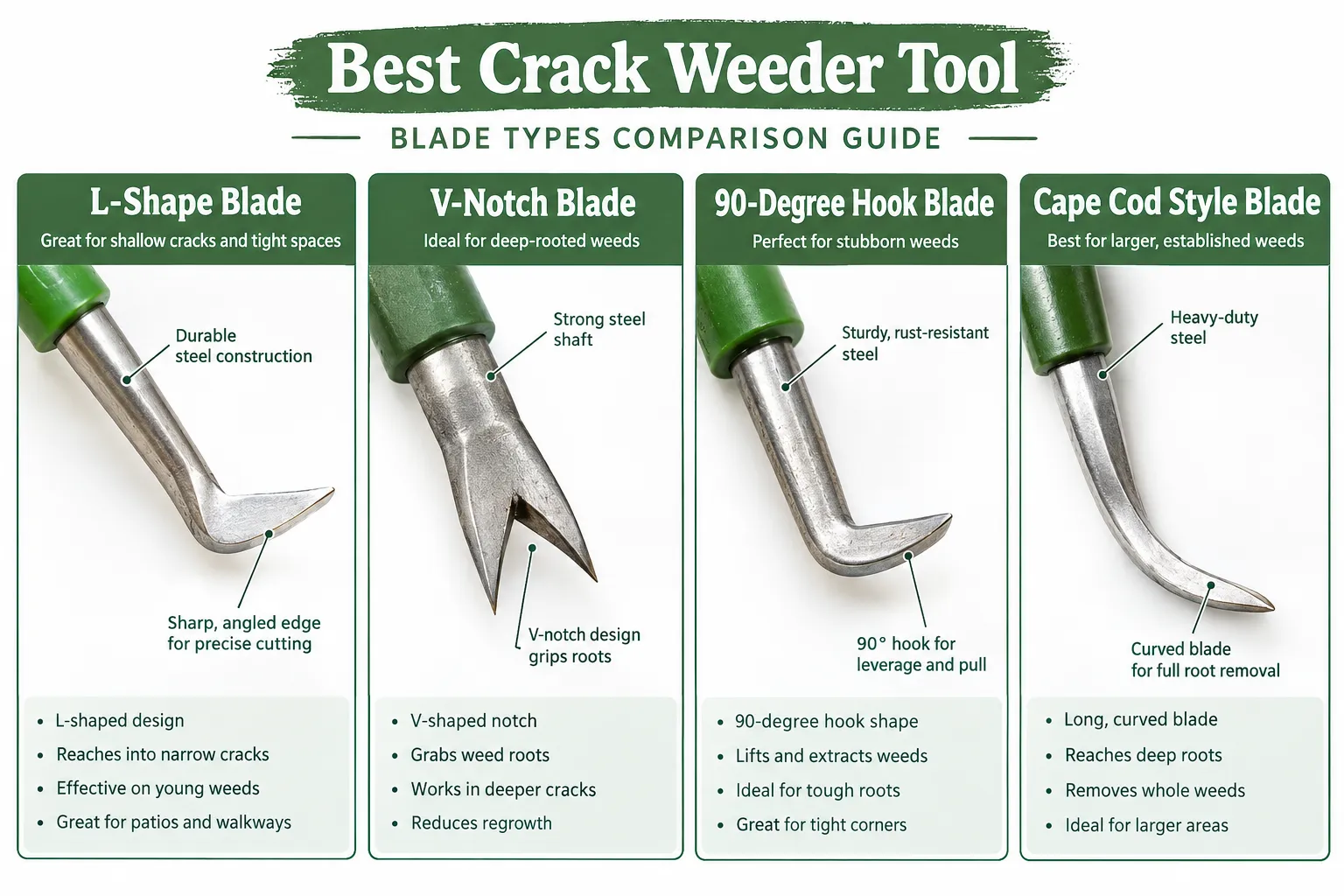
- Blade shape matters most: Look for L-shaped, 90-degree hooks, or Cape Cod-style blades that can drag through narrow expansion joints and hook taproots.
- Material dictates durability: High-carbon steel, boron steel, and cast aluminum prevent the tool from snapping when levered against hard concrete.
- Stand-up options save your back: Modular tools with long handles allow you to clear long driveways without kneeling.
- Ergonomics reduce fatigue: Gel-infused or oversized O-handles are essential for gardeners with arthritis or those tackling large patios.
- Timing is everything: Weeding after a light rain softens the soil in crevices, making root extraction significantly easier.
- Stop breaking tools: Never use a standard trowel or thin kitchen knife for concrete cracks; they lack the lateral strength required for the job.
Why You Need a Dedicated Crack Weeder Tool
A single dandelion left to seed in a driveway expansion joint can spawn up to 15,000 new weeds by the end of the season. Pulling them by hand usually snaps the foliage off at the surface, leaving the taproot intact to regenerate within days. Using chemical herbicides near patios often leads to toxic runoff, staining, and risks to pets. This is exactly where a specialized tool becomes necessary.
The best crack weeder tool is engineered specifically for the harsh environment of masonry, concrete, and stone. Unlike standard garden trowels, which are too wide for crevices and too weak for lateral leverage, crack weeders feature narrow, hardened blades designed to scrape against abrasive surfaces without dulling or snapping. They reach deep into the dark, compacted sand between pavers to hook the weed crown, the vital junction between the stem and the root, and sever it completely.
If you are dealing with a massive hardscaping project, you might want to look at our comprehensive guide on the Best Weed Removal Tools for Every Gardening Task. But for the highly specific, frustrating job of clearing the lines between your concrete slabs, a dedicated crevice tool is the only way to achieve a clean, long-lasting finish.
Top Hand-Held Crack Weeders for Precision
Hand-held crack weeders offer the best control and tactile feedback, making them ideal for delicate paver patios, intricate brickwork, and small courtyard gardens where precision is paramount.
DeWit Patio Knife
The DeWit Patio Knife (model 31-0814) is widely considered the gold standard for tight spaces. Hand-forged in Holland from premium boron steel, this tool features a sharp 90-degree hook specifically designed to slice through weed roots in crevices as narrow as 1/8-inch between patio pavers and concrete slabs [1].
- Who it’s for: Perfectionists with tightly laid brick or stone patios.
- Decision rule: Choose this if your paver gaps are extremely narrow and standard tools cannot fit.
- Why it works: The boron steel construction means it holds a razor-sharp edge longer than standard steel, allowing you to slice rather than tear the roots.
Corona ComfortGEL Crevice Weeder
For gardeners who suffer from hand fatigue or arthritis, the Corona ComfortGEL Crevice Weeder (model CT 3254) is a standout option. It utilizes a 6-inch stainless steel blade with a specialized L-shape to hook and extract taproots from narrow driveway cracks [2].
- Who it’s for: Seniors, casual gardeners, and anyone prone to hand cramping.
- Decision rule: Choose this if comfort is your primary concern during long weeding sessions.
- Why it works: The gel-infused grip absorbs the shock and pressure of scraping against concrete, while the stainless blade resists rust even if left out in the damp grass.
Edward Tools Crevice Weeder
The Edward Tools Crevice Weeder is a highly effective, budget-friendly option constructed with a high-carbon steel blade measuring 3 inches in length [5]. It features an ergonomic rubber grip specifically engineered for removing dandelions and crabgrass from tight paver spaces [5].
- Who it’s for: Homeowners looking for a reliable, low-cost solution for seasonal maintenance.
- Decision rule: Choose this if you need a durable, no-frills tool for crabgrass removal.
- Why it works: High-carbon steel provides excellent rigidity, ensuring the 3-inch blade won’t bend when you hit a stubborn rock lodged in the joint.
If you want to master the technique with these hand tools, check out our tutorial on How to Remove Weeds Between Pavers With the Right Tool.
Best Stand-Up Crack Weeders to Save Your Back
Kneeling on hot, hard concrete for hours is a fast track to knee and back pain. Stand-up crack weeders allow you to use your body weight and leverage to clear long stretches of driveway and sidewalk expansion joints efficiently.
Wolf-Garten FK-M Scraper
The Wolf-Garten FK-M scraper is a highly versatile system tool. It features a 2.8-inch wide heavy-duty steel blade and integrates seamlessly with the brand’s Interlocken click system [3]. This allows attachment to handles ranging from 6 inches all the way to 59 inches, accommodating both kneeling and stand-up sidewalk weeding [3].
- Who it’s for: Tall gardeners, landscapers, and those with mobility issues.
- Decision rule: Choose this if you want one tool head that can switch between short and long handles instantly.
- Why it works: The 2.8-inch blade is wide enough to clear standard expansion joints quickly, and the click system is notoriously secure, preventing the annoying “wobble” common in cheap interchangeable tools.
Radius Garden 205 PRO Stainless Steel Weeder
While not a traditional long-handled tool, the Radius Garden 205 PRO Stainless Steel Weeder incorporates a patented O-handle design that provides four times the gripping surface of standard tools [4]. This unique handle maximizes leverage for pulling stubborn weeds from driveway cracks using a two-handed, semi-standing approach [4].
- Who it’s for: Gardeners dealing with deeply rooted, mature weeds that require serious pulling force.
- Decision rule: Choose this if you lack grip strength but need maximum mechanical advantage.
- Why it works: The circular O-handle lets you wrap both hands around the grip, allowing you to use your arm and shoulder muscles rather than just your wrist.
Heavy-Duty Tools for Stubborn Driveway Weeds
Driveway expansion joints are notorious for housing the toughest weeds. The combination of heat, compacted road dust, and deep crevices creates an environment where only the most robust tools survive.
Fiskars Cast-Aluminum Crevice Weeder
The Fiskars Cast-Aluminum Crevice Weeder (model 370090-1001) is built for brute force. It features a rust-resistant, one-piece cast-aluminum head that prevents the tool from snapping when applying heavy leverage against hard concrete edges [6].
- Who it’s for: Homeowners with neglected driveways full of thick, woody weeds.
- Decision rule: Choose this if you have a history of snapping the heads off cheaper garden tools.
- Why it works: Because the handle neck and blade are cast as a single solid piece of aluminum, there is no weak weld point to break under pressure.
A.M. Leonard Cape Cod Weeder
A favorite among professional landscapers, the A.M. Leonard Cape Cod Weeder (model 475) features a 5/16-inch diameter steel shank and a 2.75-inch narrow, angled blade [7]. It is specifically designed to drag through sidewalk expansion joints to sever weed crowns directly at the soil line [7].
- Who it’s for: Professional landscapers and serious DIYers clearing miles of sidewalk.
- Decision rule: Choose this if you prefer a dragging/pulling motion over a scraping/pushing motion.
- Why it works: The Cape Cod design allows you to pull the blade toward you, which is ergonomically easier and faster for clearing long, straight lines of weeds.
Seymour Midwest Industrial Options
For commercial applications, brands like Seymour Midwest produce heavy-duty landscaping tools designed to withstand daily abuse from professional crews [8]. While often heavier than residential tools, their industrial-grade steel and reinforced handles ensure they survive the rigors of municipal sidewalk clearing and large-scale hardscape maintenance.
For more heavy-duty solutions, read our breakdown of the Best Driveway Crack Weeders for Stubborn Weeds.
How to Choose the Best Crack Weeder Tool for Your Yard
Selecting the right tool comes down to matching the blade geometry to your hardscaping and the handle style to your physical needs. Not all cracks are created equal, and a tool that works wonders on a wide driveway joint might be useless on a tightly packed patio.
Here is exactly what to evaluate before buying:
Key Buying Criteria
- Joint Width: Measure your paver gaps. If they are under 1/4-inch, you need a thin, forged blade like the DeWit Patio Knife. For standard 1/2-inch driveway joints, a wider Cape Cod style works best.
- Blade Material: Avoid cheap stamped steel. Look for high-carbon steel, boron steel, or cast aluminum. Concrete acts like sandpaper and will quickly destroy inferior metals.
- Handle Length: Hand-held tools offer precision for delicate patios. Long-handled tools are mandatory for driveways and long sidewalks to prevent severe back strain.
- Blade Angle: An L-shape or 90-degree hook is superior to a straight blade because it allows you to hook the root and pull it upward, rather than just pushing dirt around.
If you are dealing with a combination of organic growth, you might also need to learn How to Remove Moss and Weeds From Patio Cracks to keep the area completely clear.
Common Mistakes When Weeding Pavers and Sidewalks
Even with the best crack weeder tool in your shed, poor technique will result in broken tools and returning weeds. Sidewalk weeding requires a different approach than garden bed weeding.
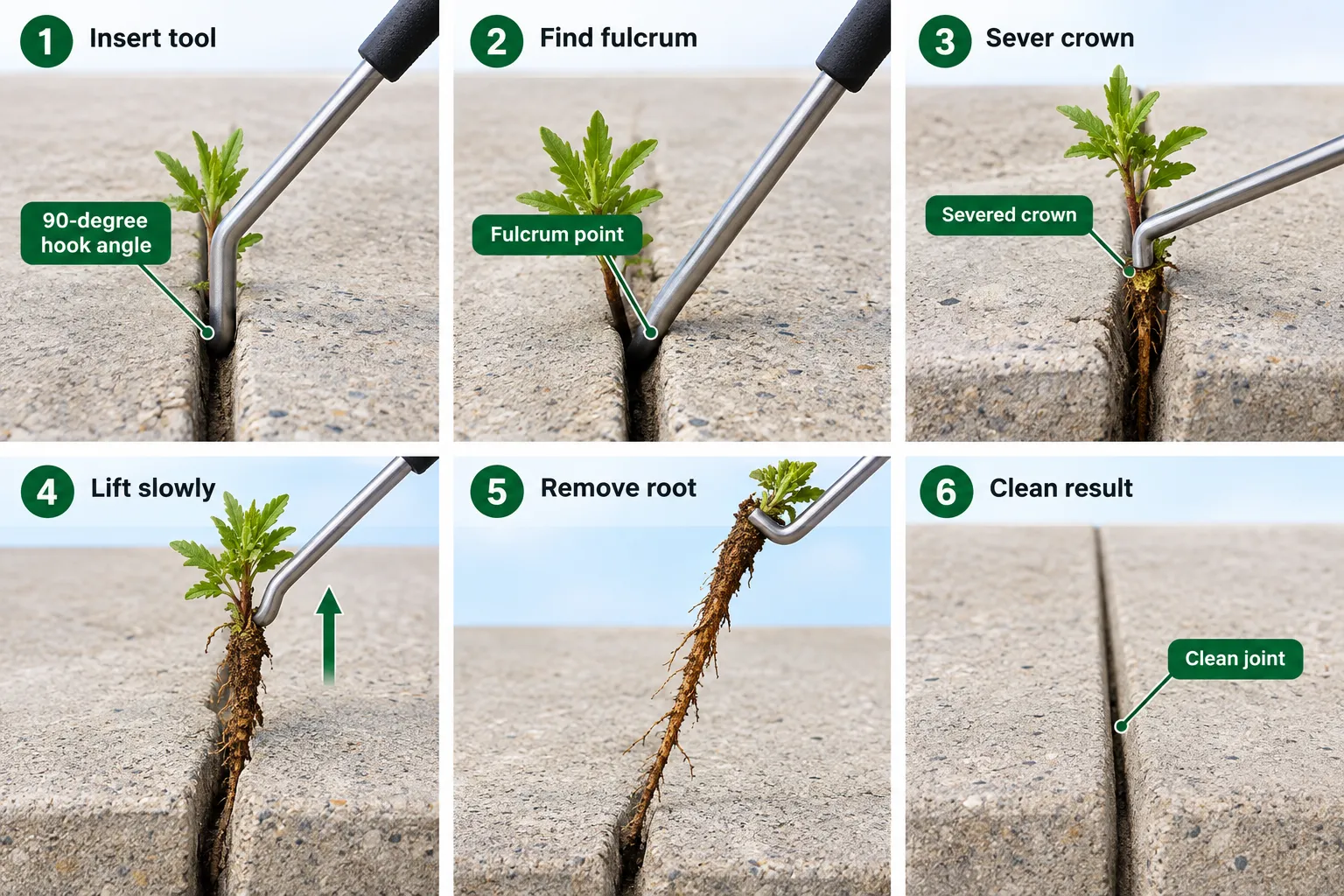
- Prying instead of slicing: Concrete is stronger than steel. If you wedge a blade into a crack and pry sideways with all your weight, the blade will snap. You must drag the tool linearly through the crack to slice the roots.
- Weeding bone-dry concrete: Trying to extract a taproot from dry, compacted sand is nearly impossible. Always weed the day after a rainstorm, or lightly hose down your patio an hour before you begin. The moisture lubricates the crevice and allows the root to slide out intact.
- Leaving the crown behind: The weed crown is the thick base where the stem meets the root. If you only scrape off the green leaves and leave the crown in the crack, the weed will regrow in a week. Your tool must go at least half an inch below the surface to sever the crown.
- Ignoring the sand: When you pull weeds out of paver joints, you often pull out the polymeric sand that locks the pavers together. Failing to sweep fresh sand back into the joints will cause your pavers to shift and invite even more weed seeds to settle in the empty gaps.
Frequently Asked Questions (FAQ)
What is the best tool to remove weeds between pavers?
The best tool is a specialized crack weeder with an L-shaped or 90-degree hooked blade, such as the DeWit Patio Knife. The hooked blade allows you to reach deep into narrow paver joints to sever the weed crown without damaging the surrounding stone.
Can I just use a flathead screwdriver to weed my driveway?
While a flathead screwdriver can gouge out dirt, it is highly inefficient. It lacks a sharpened edge to slice roots and a hook to pull them out. You will likely just push the weed deeper into the crack or tear the leaves off, leaving the root alive.
Do long-handled crack weeders actually work?
Yes, long-handled weeders like the Wolf-Garten FK-M system are highly effective for straight expansion joints on driveways and sidewalks. They allow you to use your body weight to drag the blade, saving your knees and lower back from strain.
How do I keep my crack weeder from rusting?
Because crack weeders scrape against concrete, their protective coatings wear off quickly. To prevent rust, wipe the blade clean with a dry cloth after each use and apply a light coat of mineral oil or WD-40 before storing it in a dry place.
Will a crack weeder scratch my decorative stamped concrete?
Yes, hardened steel blades can leave gray scratch marks on decorative, sealed, or stamped concrete if applied with heavy pressure. For delicate surfaces, work slowly and angle the blade so it only touches the dirt, not the concrete edges.
Is cast aluminum or carbon steel better for a crevice tool?
High-carbon steel holds a sharper edge and is better for slicing roots in tight spaces. Cast aluminum is thicker, rust-proof, and highly resistant to snapping under heavy leverage, making it better for brute-force removal in wider driveway cracks.
Conclusion
Reclaiming your hardscaping from invasive dandelions, crabgrass, and moss doesn’t require toxic chemicals or back-breaking labor, it just requires the right geometry. The best crack weeder tool for your yard depends entirely on the width of your crevices and your physical comfort needs.
For tight, high-end paver patios, the hand-forged precision of the DeWit Patio Knife is unmatched. If you are clearing a massive, neglected driveway, the heavy-duty leverage of the Fiskars Cast-Aluminum weeder or the back-saving reach of the Wolf-Garten FK-M system will make the job significantly easier. Stop fighting concrete with flimsy trowels. Invest in a dedicated crevice tool, wait for a light rain to soften the soil, and permanently severe those taproots for a pristine, weed-free driveway in 2026.