Last updated: October 17, 2026
A sharp stirrup hoe can clear a vegetable row in minutes, but most gardeners spend twice as long as they need to because they're using the wrong tool. The best garden hoe for weeding depends on your soil type, garden size, and physical needs, and picking the right one saves you hours every season [1].
Key Takeaways
- A stirrup hoe (hula hoe) is the most versatile choice for routine weeding in vegetable gardens
- A draw hoe handles thick weeds and deep roots that stirrup hoes can't manage
- Clay soil needs a sharp, heavy blade; sandy soil works with almost any hoe
- Long-handled hoes (60+ inches) reduce back strain for most gardeners
- A sharp hoe cuts cleaner and takes less effort than a dull one
- Quality hoes cost $25,$60; premium models run $50,$100+
- Hoeing damp (not wet) soil makes weeding easier in clay
- Compact 4-6 inch blades suit raised beds; wider blades cover more ground in open plots
- Sharpen at the start of each season and touch up every 4-6 weeks
- Shallow hoeing (top 1-2 inches) prevents bringing dormant weed seeds to the surface
What's the Difference Between a Garden Hoe and a Cultivator?
A garden hoe chops and slices weeds at or below the soil surface, while a cultivator loosens and aerates soil around plants. They're related tools, but they serve different primary purposes in the garden.
A hoe uses a flat or looped blade that moves horizontally through the top layer of soil, cutting weed stems and roots. A cultivator typically has tines or prongs that break up compacted soil, mixing in compost and improving airflow without necessarily targeting weeds [1].
Many action hoes do both jobs, which is why they're sometimes called "hoe-cultivators." True Temper's action hoe, for example, is marketed for both weeding and cultivating around live plants [2].
Choose a hoe if your main goal is weed removal. Choose a cultivator if you're preparing soil for planting or working in amendments. A stirrup hoe handles light cultivation too, making it a solid all-around pick for small gardens [6].
I learned this the hard way my first season. I tried using a broadfork to weed my vegetable beds and ended up just turning all the soil over. The weeds came back within a week because I'd chopped their roots into pieces that all resprouted. A hoe would have sliced those weeds off cleanly at the root line instead.
Best Garden Hoe for Weeding by Soil Type: Clay vs Sandy Soil
Your soil type directly affects which hoe works best. Clay soil needs a sharper, heavier hoe blade to slice through dense, sticky earth. Sandy soil is forgiving and works well with almost any hoe type.
Clay soil holds moisture and compacts easily, which means weeds grip tightly. You need a hoe with a sharp edge and enough weight to cut through the resistance. A draw hoe or a heavy-duty stirrup hoe works well here, the blade needs to be sharp enough to slice rather than just push the soil around [4].
Sandy soil drains quickly and is easy to work. Almost any hoe handles sandy soil well, but lighter hoes are easier since you don't need extra weight to push through dense earth [1].
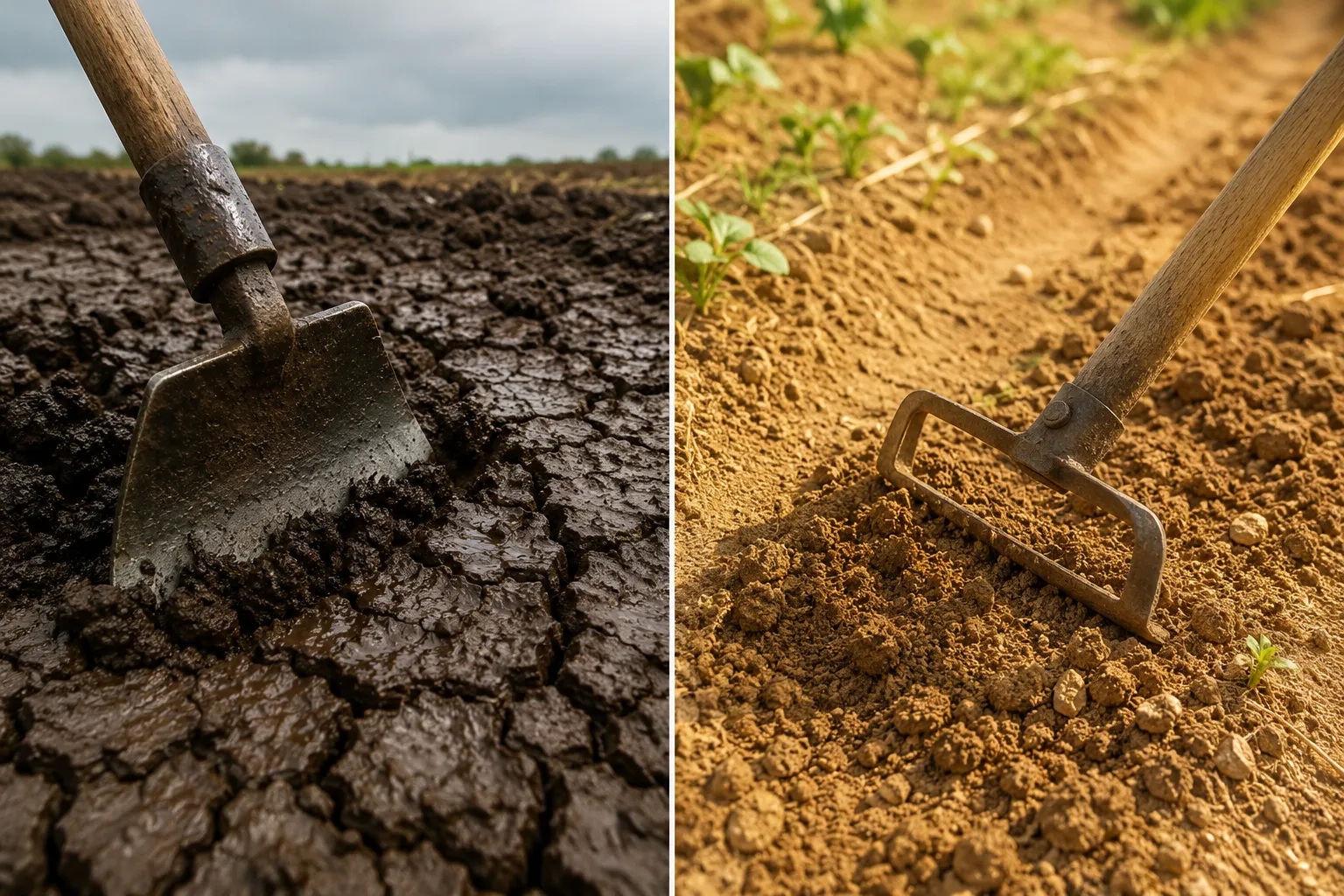
For clay soil, try hoeing a day or two after rain when the soil is damp but not waterlogged. The moisture softens the clay just enough to let the blade slice through. In sandy soil, hoeing after a light watering helps too, but it's less critical [2].
Can You Use a Regular Hoe on Wet Soil?
You can use a regular hoe on damp soil, but avoid hoeing when soil is wet and sticky. In clay soil, wet conditions cause soil to clump and stick to the blade, making the job harder.
Test soil with the squeeze test: grab a handful and squeeze it. If it forms a ball that crumbles when you poke it, it's ready to hoe. If it forms a sticky ball that holds together, wait another day [2].
Garden Hoe vs Stirrup Hoe: Which Is Better for Weeding?
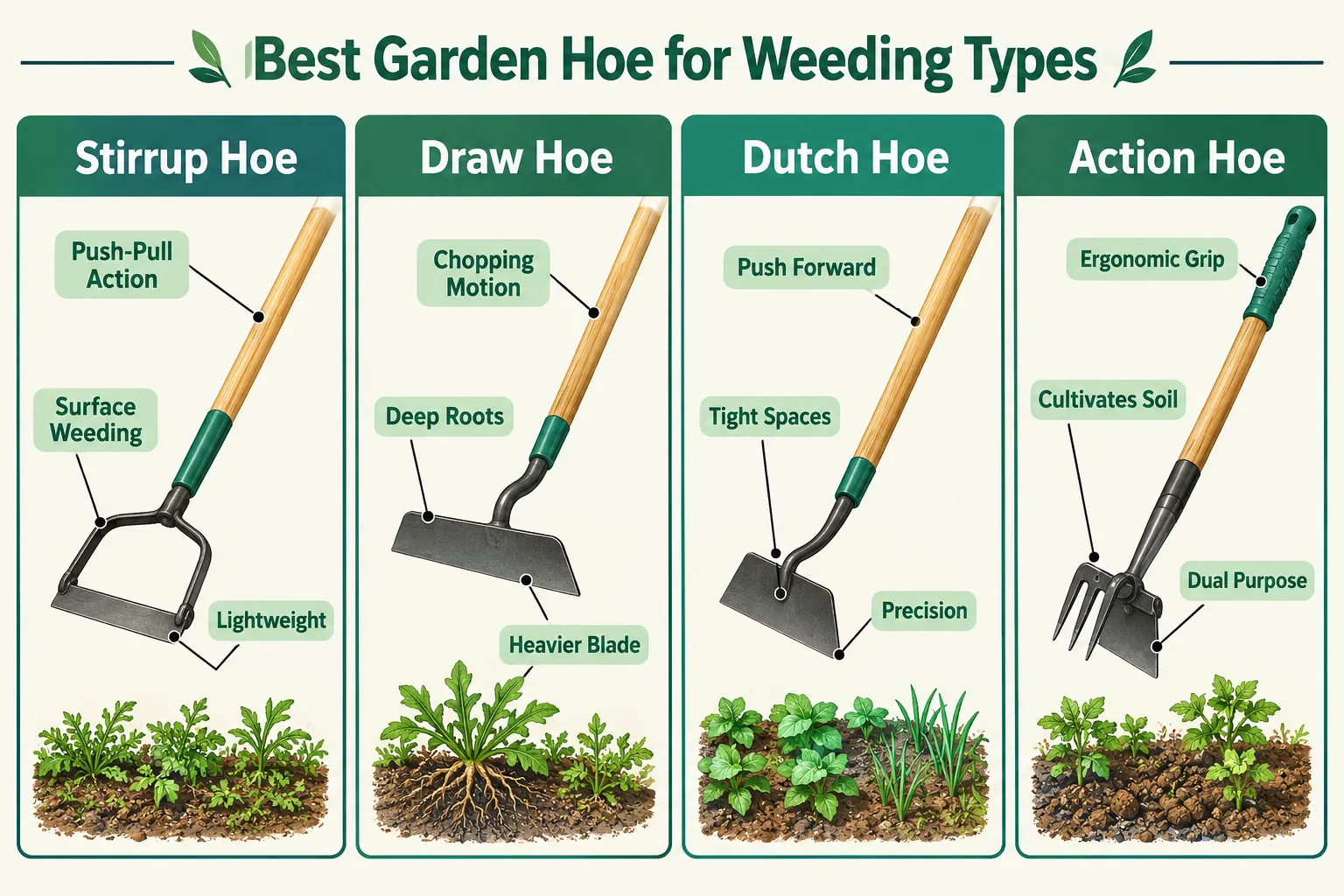
A stirrup hoe (also called a hula hoe or action hoe) is better for routine weeding in vegetable gardens and between rows. A standard draw hoe is better for chopping established weeds with thick stems or deep taproots [6].
Here's the key difference: a stirrup hoe's blade moves back and forth with a push-pull motion, slicing weeds just below the surface on both strokes. A draw hoe cuts on the pull stroke only, lifting the blade to chop down into the soil [6].
| Feature | Stirrup Hoe | Draw Hoe |
|---|---|---|
| Best for | Surface weeds, shallow roots | Deep-rooted weeds, compacted soil |
| Motion | Push and pull | Chop and pull |
| Soil disruption | Minimal | More |
| Learning curve | Easy | Moderate |
The stirrup hoe's push-pull action makes it efficient for maintaining weed-free rows. You work the blade just below the soil surface, cutting weeds off at the root line without turning the soil over. This keeps dormant weed seeds buried, reducing future germination [1].
Choose a stirrup hoe if you weed regularly and want to maintain clean beds with minimal effort. Choose a draw hoe if you're breaking new ground or dealing with established weeds that need real chopping power.
For more on this comparison, see our guide: Is a Stirrup Hoe the Right Tool for Your Vegetable Garden?
Best Garden Hoe for Weeding in Raised Beds and Small Spaces
The best garden hoe for weeding in raised beds is a compact stirrup hoe or a short-handled draw hoe with a 4-6 inch blade width. These fit between closely spaced plants and let you work without reaching awkwardly across wide beds.
Raised beds create a specific challenge: you're working at waist height, so handle length matters less than in-ground beds. A shorter handle (24-36 inches) gives better control and keeps you from banging the handle against the bed frame.
For tight spaces, look for hoes with:
- Blade width of 4-6 inches for precision between plants
- Shorter handles (24-48 inches) for raised bed control
- Lightweight construction to reduce fatigue
- A blade shape that reaches into corners
A handheld hoe works well for very small spaces or container gardens. NBC News Select notes that handheld hoes are better for small garden areas where you need precision up close [2].
What Size Hoe Should I Get for My Garden?
Match blade width to your plant spacing and handle length to your height and bed configuration.
Blade width guidelines:
- 4-5 inches: Raised beds, containers, closely spaced plants
- 6-7 inches: Standard vegetable rows, mixed borders
- 8+ inches: Open ground, large beds, pathways
A wider blade covers more ground per pass but doesn't fit between closely spaced plants. A narrow blade takes more passes but gives precision where you need it.
Handle length: Stand upright and hold the hoe with your arms relaxed at your sides. The handle should reach roughly waist height. Most standard hoe handles run 54-60 inches. If you're over 6 feet tall, look for longer handles to avoid stooping [2].
Best Garden Hoe for People with Back Pain
If you have back pain, the best garden hoe is a long-handled stirrup hoe with an ergonomic grip. The push-pull motion lets you weed standing upright, and the longer handle means less bending [2].
Back-friendly features to look for:
- Long handle (60+ inches) so you work standing straight
- Stirrup or action blade that cuts on both push and pull strokes
- Lightweight materials (aluminum or fiberglass weigh less than wood)
- Ergonomic grip with cushioning or contoured shape
The key is maintaining upright posture. Every time you bend forward, you load your lower back. A long-handled hoe keeps your spine in a neutral position [2].
I dealt with this after a lower back injury a few years ago. Switching from a short-handled draw hoe to a 60-inch stirrup hoe changed everything. I could weed my entire 20-foot vegetable bed without stopping to stretch every five minutes.
Pro tip: Take breaks every 15-20 minutes and switch between weeding and lighter garden tasks to vary your movement patterns.
Best Garden Hoe for Thick Weeds and Roots
For thick weeds and deep roots, a draw hoe with a heavy blade is your best bet. The chopping action cuts through tough stems and severs taproots that a stirrup hoe can't handle [4].
Weeds like thistle, dock, and dandelion have thick taproots that shrug off a stirrup hoe's surface slicing. You need downward force. A draw hoe with a sharp, heavy blade lets you chop down at an angle and sever the root below the crown.
What makes a hoe good for tough weeds:
- Blade weight: Heavier blades chop better
- Edge sharpness: A sharp edge cuts instead of crushing
- Blade angle: A steeper angle bites deeper into soil
- Handle strength: You'll put real force on the tool
For established weeds, aim your chop at the root crown, the point where stem meets root. Cut an inch below soil level and you'll kill most perennial weeds on the first pass.
If you're dealing with serious invasive weeds, you may need additional tools. See our guide: Best Weed Removal Tools for Every Gardening Task
How Much Does a Good Garden Hoe Cost?
A quality garden hoe costs $25,$60 for most home gardeners. Basic models start around $15, while premium hoes run $50,$100+. You get what you pay for in blade quality, handle durability, and ergonomics [10].
Price ranges:
- $15,$25: Budget hoes, adequate for light occasional use
- $25,$45: Solid mid-range options for regular gardeners
- $45,$60: High-quality hoes with better steel and handles
- $60+: Premium models, specialty designs, ergonomic features
The Craftsman 54-inch Wood-Handle Action Hoe, highlighted by NBC News Select, retails around $30 at Lowe's and is a solid mid-range pick for general weeding [2].
Don't overspend if you're just starting out. A $30 stirrup hoe handles most home garden weeding perfectly well. Upgrade when you know what you need.
Do I Need a Sharp Hoe or Does Dull Work Fine?
You absolutely need a sharp hoe for effective weeding. A sharp hoe cuts through weeds with minimal effort, while a dull hoe just pushes them over or tears at the soil [4].
A sharp blade slices cleanly through weed stems and roots. A dull blade crushes and tears, which takes more force and leaves ragged cuts that weeds can recover from.
Signs your hoe is too dull:
- The blade slides over weeds instead of cutting them
- You need to hack repeatedly to sever a single weed
- The cut end of the weed looks crushed, not sliced
- You're working harder than you should be
A sharp hoe should slice through a weed with a single smooth stroke. If you're chopping at the same weed three or four times, it's time to sharpen.
Hoe Maintenance: How Often to Sharpen?
Sharpen your hoe at the start of each growing season and touch up the edge every 4-6 weeks during regular use. If you garden year-round, plan to sharpen monthly during active growing seasons [4].
How to sharpen a hoe:
- Clean the blade with a wire brush to remove soil and sap
- Secure the hoe in a vise or hold it firmly
- Use a flat file or sharpening stone
- Follow the original bevel angle (usually 15-25 degrees)
- File in one direction, away from your body
- Check for a burr on the opposite side and remove it
- Wipe the blade with oil to prevent rust
Don't over-sharpen. A hoe doesn't need a razor edge, it needs a clean, consistent bevel that holds up to soil contact. Over-sharpening thins the edge and makes it dent more easily.
Store your hoe indoors, hang it by the handle, and keep the blade clean and oiled between seasons. A hoe left outside will rust and degrade quickly, no matter how good the steel is.
Common Mistakes When Using a Garden Hoe
The most common mistake gardeners make with hoes is chopping too deeply. Deep hoeing brings dormant weed seeds to the surface where they germinate, creating more weeds than you started with [1].
Common hoe mistakes:
- Hoeing too deep: Stay in the top 1-2 inches to avoid bringing up weed seeds
- Hoeing when soil is too dry: Dry soil resists the blade and makes weeding harder
- Using the wrong hoe for the job: Don't use a stirrup hoe on established thistles
- Letting the blade go dull: A dull hoe makes every task take longer
- Hoeing wet, sticky clay: Soil sticks to the blade and makes a mess
I made the deep-hoeing mistake for years. I thought I was being thorough by turning the soil several inches down. Instead, I was planting a fresh crop of weed seeds every time I worked. Once I switched to shallow, surface-level hoeing, my weed problems dropped dramatically [1].
The fix: Aim to slice weeds just below the surface, no more than an inch deep. You want to sever the weed from its root, not excavate the whole plant.
Why Is My Hoe Not Cutting Through Weeds?
If your hoe isn't cutting through weeds, the most likely cause is a dull blade. Other causes include using the wrong hoe type, hoeing when soil is too dry, or using incorrect technique.
Troubleshooting:
- Blade is dull: Sharpen it following the maintenance steps above
- Wrong hoe type: Switch from a stirrup to a draw hoe for thick weeds
- Soil too dry: Water the area and wait a day, then hoe
- Technique issue: Use a push-pull motion with a stirrup hoe, not a chopping motion
A sharp stirrup hoe should slice through most weeds with minimal pressure. If you're pushing hard and nothing's happening, stop and check the blade [4].
FAQ
What is the best garden hoe for weeding?
A stirrup hoe (also called a hula or action hoe) is the best all-around choice for weeding. Its push-pull action cuts weeds on both strokes and works efficiently in most garden settings [6].
How wide should my hoe blade be?
For raised beds and tight spaces, choose a 4-6 inch blade. For open vegetable rows, 6-7 inches works well. For large areas and paths, 8+ inches covers more ground per pass.
Is a stirrup hoe better than a draw hoe?
It depends. A stirrup hoe is better for routine weeding and maintenance. A draw hoe is better for chopping thick weeds and breaking new ground [6].
How often should I sharpen my hoe?
Sharpen at the start of each growing season and touch up every 4-6 weeks during regular use. Monthly sharpening works for year-round gardeners [4].
Can I use a hoe on wet clay soil?
Avoid hoeing wet, sticky clay. Wait until the soil is damp but not saturated, usually 1-2 days after rain [2].
What's the best hoe for back pain?
A long-handled stirrup hoe (60+ inches) with an ergonomic grip lets you weed standing upright, reducing strain on your lower back [2].
How much should I spend on a garden hoe?
A quality hoe costs $25,$60. Budget models work for light use, but spending $30,$45 gets you a durable tool that lasts years [10].
Do I need a sharp hoe for weeding?
Yes. A sharp hoe cuts cleanly with minimal effort. A dull hoe pushes weeds over instead of cutting them and makes every task harder [4].
Conclusion
Finding the best garden hoe for weeding comes down to matching the tool to your garden, soil, and physical needs. A stirrup hoe handles most routine weeding with minimal effort. A draw hoe tackles the tough stuff. Long handles and sharp blades save your back and your time.
Next steps:
- Assess your garden: What are you growing, and how big are your beds?
- Check your soil type: Is it clay, sandy, or loam?
- Pick the right hoe: Stirrup for maintenance, draw for tough weeds
- Sharpen before you start: A sharp hoe is a productive hoe
- Weed regularly: Frequent light weeding beats occasional heavy weeding
For more weeding guidance, check out our comparison: Garden Hoe vs. Weed Puller: Which Is Better for Your Yard?
The right hoe makes weeding faster, easier, and almost satisfying. Almost.
Related Reading
- Best Weed Removal Tools for Every Gardening Task
- Is a Stirrup Hoe the Right Tool for Your Vegetable Garden?
- Garden Hoe vs. Weed Puller: Which Is Better for Your Yard?
References
[1] Best Garden Hoes – https://www.bobvila.com/reviews/best-garden-hoes/
[2] Best Weeding Tools Rcna331846 – https://www.nbcnews.com/select/shopping/best-weeding-tools-rcna331846
[4] Best Garden Hoe – https://spearheadspade.com/blogs/garden-guides/best-garden-hoe
[6] Best Garden Hoes For Home Gardeners Buyers Guide What Actually Works – https://harvesttotable.com/best-garden-hoes-for-home-gardeners-buyers-guide-what-actually-works/
[10] us.amazon – https://us.amazon.com/Best-Sellers-Garden-Hoes/zgbs/lawn-garden/3753681